Skip the phone queue - book your appointment in minutes, day or night.

Dizziness is a common symptom with many possible causes - cardiac, neurological, vestibular (inner-ear) and blood-pressure related. When the cause is cardiac, it is usually felt as light-headedness or faintness rather than the spinning sensation known as vertigo. This page explains the cardiac angle: what it is, when it needs assessment, and how our cardiologists in Leeds and Sheffield investigate it.


Dizziness is extremely common - studies suggest more than one in five people report dizziness in the past month [1] - and most causes are not cardiac. From a cardiac perspective, it tends to arise when the heart is briefly unable to maintain adequate blood pressure or output, reducing blood flow to the brain. This is usually felt as light-headedness or faintness rather than vertigo (a spinning sensation, usually from an inner-ear problem).
Call 999 immediately if your dizziness comes on with:
LivingCare is a specialist outpatient service and is not an emergency care facility. If your symptoms are sudden or severe, call 999.
For dizziness that is not an emergency, consider booking a private cardiology assessment if it:
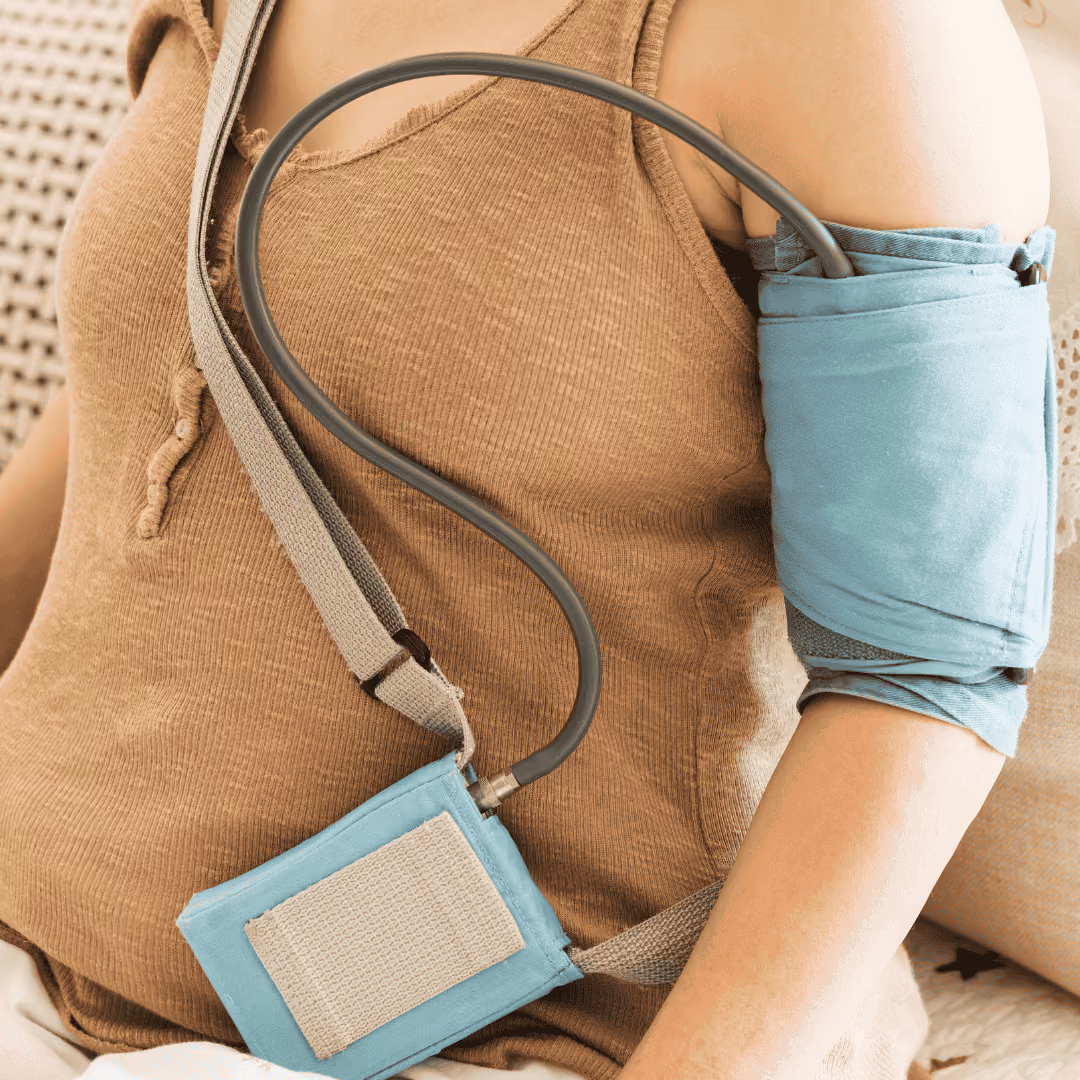
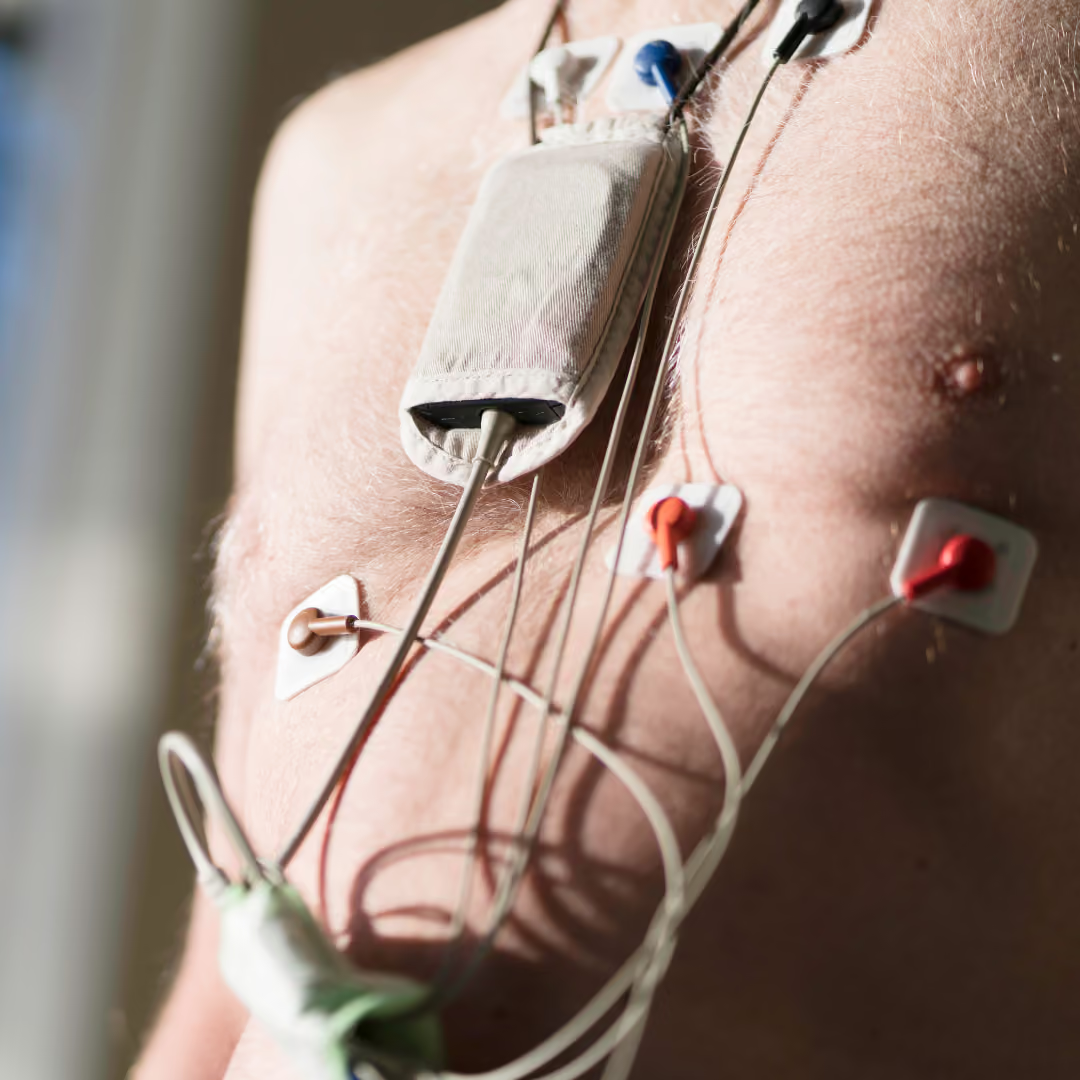
Our cardiologists begin with a thorough history and examination, then arrange only the tests you need. These may include an ECG to record your heart's rhythm, ambulatory ECG monitoring worn over 24 hours to several days to catch intermittent rhythm problems, 24-hour blood pressure monitoring to check for drops on standing, and an echocardiogram to assess the heart's structure and function. You can see the full range of tests on our cardiology department page.
Common cardiac causes include:
Many causes are not cardiac and may need a different specialist:
A cardiology assessment helps establish whether your dizziness has a cardiac cause and, if not, points you toward the right next step. It sits alongside our related pages on blackouts and palpitations, which can occur together with dizziness. To have your symptoms looked at, you can book a private cardiology assessment at our Leeds or Sheffield clinic.

We're always on hand, so get in touch and we'll get back to you straight away.
Speak to our team