
Bowel Prep, Honestly: What It's Really Like Before A Colonoscopy
Oct 7, 2026


Skip the phone queue - book your appointment in minutes, day or night.
Published on
28/8/2026


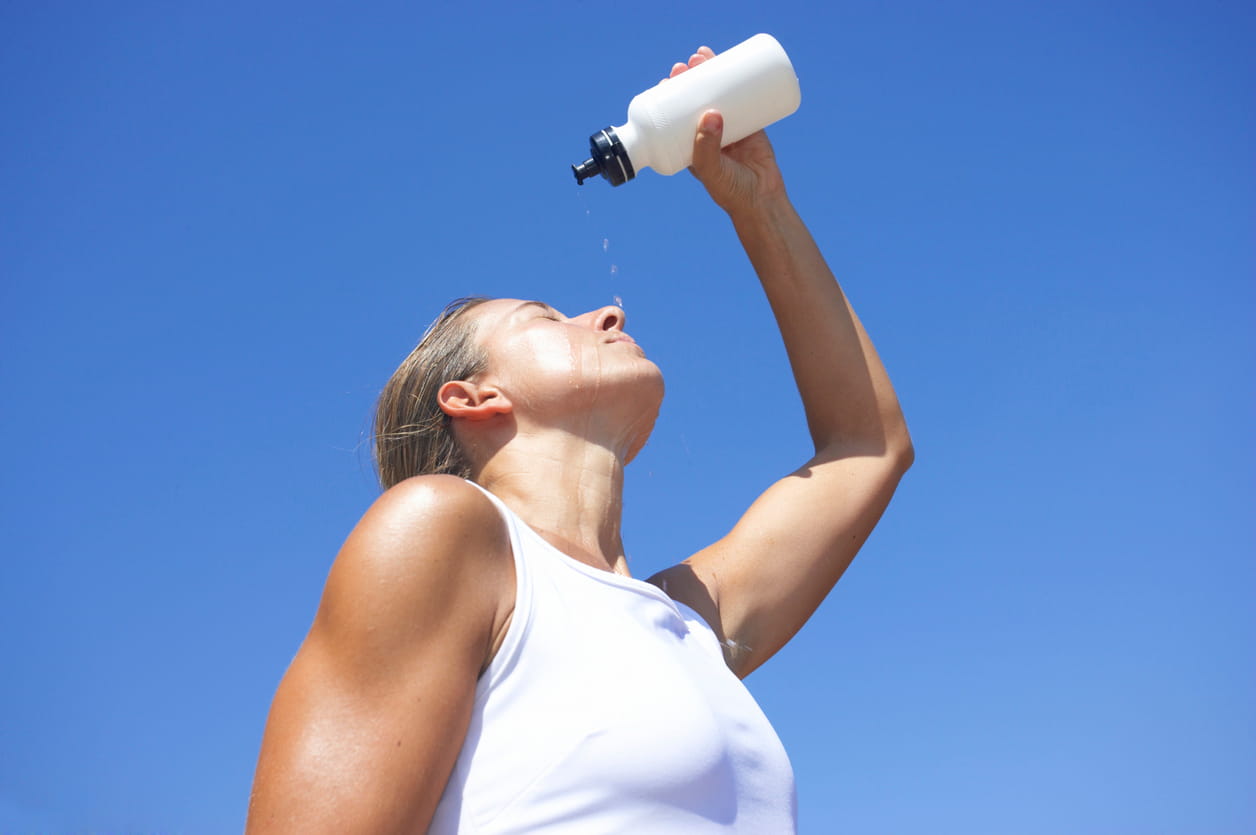

In most cases you don't need to give up exercise in hot weather - you need to move it. Train in the early morning or the evening rather than the hottest part of the day, ease off strenuous effort when it is very warm, drink regularly, and build up gradually. Stop and rest if symptoms appear.
Summer is one of the easiest times of year to be more active, and it is worth doing. The British Heart Foundation puts the reduction in risk of heart and circulatory diseases from being physically active at up to 35% [1], and recommends that adults do at least 150 minutes of moderate intensity exercise per week [1].
Heat doesn't cancel that. It changes how you go about it, and makes one or two things worth checking before you push harder.
Because cooling you down takes effort. Hot weather means your body has to work harder to keep its core temperature at a normal level, which can put extra strain on your heart, lungs and kidneys [2]. It does this by opening your blood vessels wider than normal - vasodilation - while your heart beats quicker to help pump blood around your body [2].
The British Heart Foundation also notes that some types of exercise, such as running and football, can make you very hot and dehydrated, and will put extra pressure on your heart during hot weather [2]. So if your usual run feels harder in August than in April, that is your body doing what it should - a reason to adjust the session, not to abandon it.
For most people it is a case of moving the activity rather than cancelling it. GOV.UK advises limiting the amount of strenuous physical activity you do during the hottest part of the day, and planning it for cooler times such as the early morning or the evening [3]. The British Heart Foundation advises staying out of the sun during the hottest part of the day, between 11am and 3pm [2].
On days of extreme heat the advice tightens. NHS heatwave guidance is to stay in the shade especially between 11am and 3pm, and to avoid exercise or activity that makes you hotter [4]. That is heatwave advice: scale right back on those days rather than giving up activity for the summer.
Beyond timing, small changes do most of the work. These are general principles from NHS, GOV.UK and British Heart Foundation guidance, not personal advice.
Regularly, rather than waiting until you are thirsty. GOV.UK advises drinking fluids regularly throughout the day, especially if you are physically active, and drinking enough that your pee is a pale straw colour [3]. Water, diluted squash and lower-fat milk all count, with alcohol limited [3]. Our article on fuelling your exercise covers what to eat and drink around a session more generally.
Some people are more affected by heat than others. The British Heart Foundation lists adults over 75, very young children, people with long-term heart or circulatory conditions, and people with kidney problems or diabetes [2]. GOV.UK adds people aged 65 and over, children under 5, people with breathing problems, mobility problems or Parkinson's disease, and pregnant women [3].
Medicines matter too: NHS guidance names people on multiple medicines, or medicines that may make them more likely to be badly affected by hot weather [4]. A GP or pharmacist can tell you whether that applies to yours. The British Heart Foundation also advises speaking to your doctor before beginning any physical activity for the first time [5].
A few symptoms are worth taking seriously rather than training through. The British Heart Foundation puts it plainly: you should not start any exercise if you are currently feeling symptoms, and should stop and rest if you notice them during your exercise [5]. Its guidance for people exercising with a heart condition adds a stop list - stop exercising if you experience any chest pain, palpitations, dizziness or light-headedness [6]. These are reasons to get something looked at, not predictions of disease.
LivingCare is a specialist outpatient service and is not an emergency care facility. If your symptoms are sudden or severe, call 999.
Is it safe to exercise in hot weather?
For most healthy adults it is manageable with sensible adjustments - training when it is cooler, easing off strenuous effort in the middle of the day, and drinking regularly [3]. Heat does make your heart work harder [2]. On heatwave days, NHS advice is to avoid activity that makes you hotter [4].
How do I know if I am working too hard in the heat?
The talk test is a useful guide: at a moderate intensity your breathing rate increases but you can still talk and keep going comfortably [6]. If you develop chest pain, palpitations, dizziness or light-headedness, the advice is to stop and rest [6].
When should I see a cardiologist about symptoms during exercise?
If you notice new chest pain on exertion, breathlessness that is unusual for you, palpitations, dizziness or a blackout, it is worth having them assessed before you increase your activity [5][6]. If you have fainted while exercising, the NHS advises calling 999 [10].
Book A Cardiology Assessment
LivingCare's consultant cardiologists provide private cardiology assessment in Leeds and Sheffield - at Thorpe Park Clinic in Leeds and Canon Medical Arena in Sheffield. If something has been niggling when you exercise, you can be seen quickly and find out what is behind it: no GP referral needed, self-pay or insurance. Exceptional care, without the wait.
If you are building towards an event this summer, cardiac screening for sport and events is another route in.
This article is for general information and is not sponsored content.