
Bowel Prep, Honestly: What It's Really Like Before A Colonoscopy
Oct 7, 2026


Skip the phone queue - book your appointment in minutes, day or night.
Published on
23/7/2026


The LivingCare Group
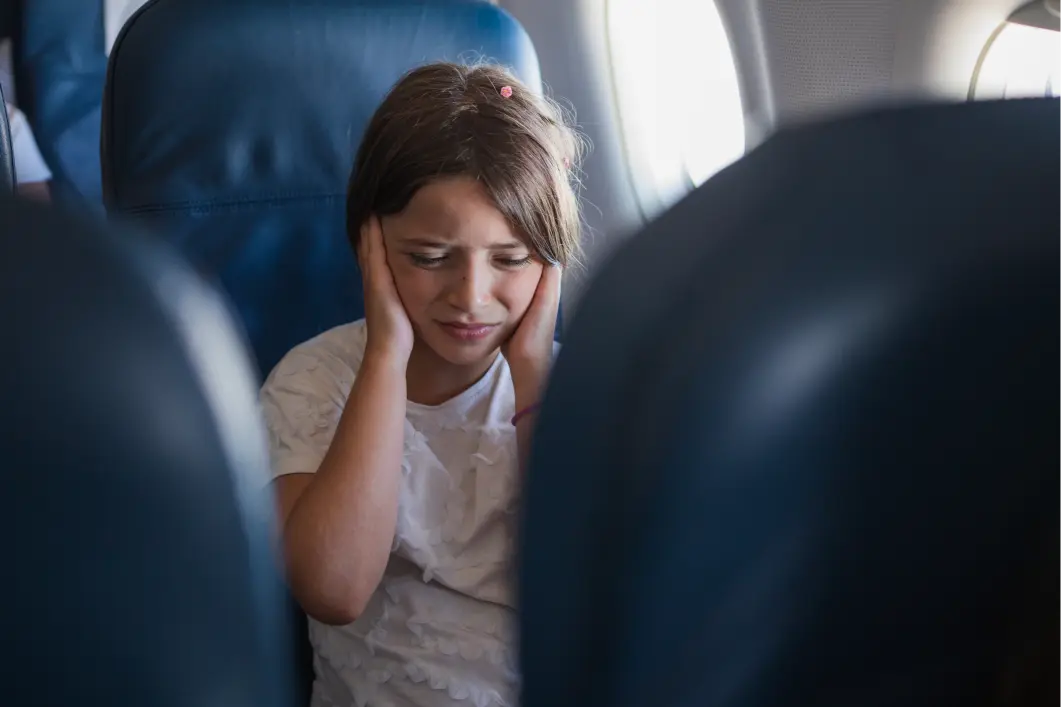

Your ears block up when you fly because the air pressure in the cabin changes faster than the pressure inside your middle ear can keep up. This is known as aeroplane ear (ear barotrauma). For most people it is uncomfortable rather than serious and settles soon after landing, and there are simple things you can do to prevent and relieve it. If the blocked feeling, pain or muffled hearing lingers for days after a flight, an ENT assessment can help find out why.
Ear barotrauma is the most common medical problem reported by air travellers, and around 1 in 10 adult passengers show signs of middle-ear barotrauma after a flight [1]. So if your ears block up when you fly, you are in very good company.
Summer travel season is when this comes up most. The good news is that a few simple habits before and during a flight prevent it for most people, and you don't need a GP referral to see an ENT specialist privately at our clinics in Leeds and Morley if the problem keeps returning or won't clear.
Aeroplane ear, also called ear barotrauma, is the discomfort or blockage you feel when the pressure in your middle ear doesn't match the pressure around you. It most often happens during the take-off and landing of a flight, when cabin pressure changes quickly.
According to the NHS, the symptoms can include a feeling of pressure or fullness in the ears, muffled or dulled hearing, mild pain, and sometimes a popping or clicking sensation. For most people these symptoms are short-lived and ease as the pressure equalises.
Behind your eardrum is the middle ear, a small air-filled space connected to the back of your nose by a narrow channel called the Eustachian tube. Its job is to keep the pressure inside your ear equal to the pressure outside.
As a plane climbs or descends, the cabin pressure changes. The Eustachian tube usually opens to let air move in or out and balance things out, which is the "pop" you feel. When it can't open quickly enough, the pressure difference pulls on the eardrum and causes that blocked, painful feeling. Anything that narrows or blocks the tube makes this more likely, such as a cold, allergies (including hay fever), allergies (including hay fever) or sinus congestion.
The aim is to keep the Eustachian tube open and the pressure balanced, especially during descent. The NHS and other authorities suggest several practical steps:
These steps help most travellers. They are general measures, not personal medical advice, so check with a pharmacist or clinician if you are unsure what suits you.
For most people the blocked feeling clears within minutes to hours as the pressure settles. Gently swallowing, yawning, chewing, or trying the Valsalva manoeuvre can help your ears equalise. If your nose is congested, treating that congestion often helps the ears clear too.
Some travellers find their ears stay blocked or muffled for longer. If that happens and it doesn't ease over the following days, it is worth getting it checked rather than waiting it out.
Aeroplane ear is usually temporary, but sometimes a blocked or muffled ear after flying points to something that needs a closer look. The NHS advises seeing a clinician if symptoms such as pain, reduced hearing or a feeling of fullness do not improve within a few days, or if symptoms are severe.
A persistent blockage can have several causes. An ENT (ear, nose and throat) specialist can examine your ear, identify the underlying cause, and guide the next steps. At LivingCare, our ENT specialists provide consultation and examination, along with assessment of a persistent blocked or muffled ear so you understand what is causing your symptoms and what your treatment options are.
This article is general information and isn't a substitute for personal medical advice. If you're worried about your symptoms, speak to a pharmacist, GP or ENT specialist.
If you already have a cold, hay fever or sinus congestion when you travel, your ears are more likely to block up, so it is worth managing that before you fly. Starting your usual hay fever treatment ahead of a trip, keeping your nose clear, and using the equalising techniques above all help. If blocked ears regularly spoil your flights, or one won't clear after a trip, an ENT assessment before or after travel can help you get to the bottom of it.
For most people the blocked feeling eases within minutes to a few hours of landing as the pressure equalises. The NHS advises seeing a clinician if symptoms such as pain, muffled hearing or fullness do not improve within a few days, or if they are severe.
Flying with a cold or congested nose makes blocked ears more likely because the Eustachian tube is more easily blocked. It isn't usually dangerous, but it can be uncomfortable. A pharmacist can advise on a decongestant or antihistamine to use before you fly, and the equalising techniques become more important.
A build-up of earwax can contribute to a feeling of blockage or muffled hearing, and it may make pressure changes feel worse. If wax is part of the problem, an ENT specialist can assess your ears and, where appropriate, clear it with microsuction. LivingCare offers ear microsuction as part of its ENT service.
Swallowing, yawning and chewing all help your ears equalise. You can also try the Valsalva manoeuvre - pinch your nose, close your mouth and gently breathe out through your nose. Do it gently rather than forcefully. If your ears won't clear, or it is painful, it's worth getting them checked.
Consider an assessment if a blocked or muffled ear doesn't clear within a few days of flying, if you have ongoing pain or reduced hearing, or if blocked ears keep affecting your travel. An ENT specialist can examine your ear, identify what is contributing and advise on the next steps.
If blocked ears are spoiling your travel, or one won't clear after a flight, our ENT specialists can examine your ears and help you get to the bottom of it. With LivingCare you can book privately - no GP referral needed, self-pay or insurance - at our clinics in Leeds (Thorpe Park) and Morley (Fountain Medical Centre).
This article is for general information and is not sponsored content.