
Bowel Prep, Honestly: What It's Really Like Before A Colonoscopy
Oct 7, 2026


Skip the phone queue - book your appointment in minutes, day or night.
Published on
13/10/2026


The LivingCare Group
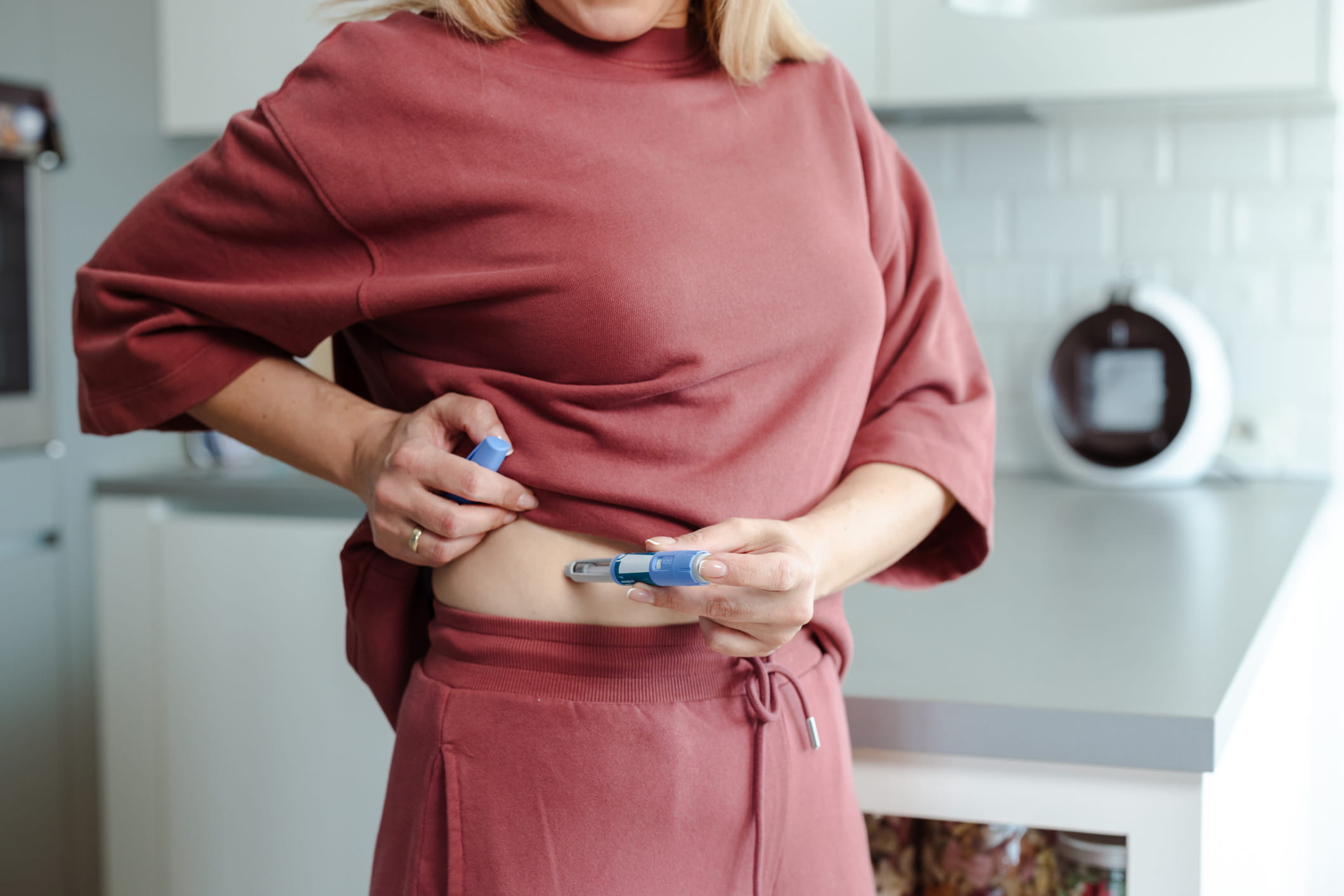

If you take a weight-loss medicine such as Wegovy, Ozempic or Mounjaro and you're booked for a gastroscopy or colonoscopy, the most useful thing you can do is simple. Tell the team when you book, and don't stop or change your medicine on your own. UK national guidance does not set a fixed time to stop these medicines before a procedure. It asks for an individual assessment instead [2] - our pre-assessment team will guide you through this.
You're far from alone in asking. About 1.6 million adults in Great Britain - 2.9% - used a GLP-1 or GLP-1/GIP medicine to support weight loss in the year to early 2025, according to a UCL survey published in BMC Medicine [1]. So it's a common question. You may read different advice online.
Semaglutide (sold as Wegovy and Ozempic) belongs to a group of medicines called GLP-1 receptor agonists. Tirzepatide (sold as Mounjaro) is a dual GIP/GLP-1 medicine that works in a similar way. They are usually given as a weekly injection, and in June 2026 the MHRA approved the first tablet form of semaglutide for weight loss in the UK [5].
This article is only about what these medicines mean for a scope. It isn't about the medicines themselves.
Because they slow down how quickly your stomach empties. The MHRA, the UK medicines regulator, calls this "a recognised side effect of these medicines", and advises that people taking them "may have residual gastric contents despite preoperative fasting" [2]. In plain English, some food may still be in the stomach even after you've fasted. The MHRA's advice is written about procedures under general anaesthesia or deep sedation.
For a gastroscopy (a thin, flexible camera passed through the mouth into the stomach), a review pooling observational studies has linked these medicines to more food left in the stomach and to more gastroscopies being stopped early [3]. For a colonoscopy (a camera examination of the large bowel), they have been linked to bowel preparation - the laxative clear-out beforehand - working less well more often [4].
The same reviews did not find a higher rate of aspiration, where stomach contents are breathed into the lungs [3], or a significant rise in repeat colonoscopies [4]. The point is not that a scope is unsafe on these medicines. It's that the team needs to know, so they can plan for it.
Not as a fixed national rule. You may read online that everyone needs to stop for a set number of days or weeks. Through the pre-assessment process, this will be personalised to your needs. At LivingCare, we ask patients not to take weight-loss injections or tablets in the week of the procedure.
Tell us at booking. Let us know you take one of these medicines - which one, and whether it's an injection or a tablet - when you book, not on the day.
Don't stop, skip or change it on your own. The MHRA's advice to patients is to "make sure you inform your healthcare team" and "do not stop your treatment without first discussing this with your doctor" [2]. If you have questions about the medicine itself, talk to the person who prescribes it.
Follow the instructions we give you for your procedure.
We ask patients not to take weight-loss injections or tablets in the week of the procedure.
Dr Nick Burr, Consultant Gastroenterologist and Endoscopist at LivingCare, explained: "These medicines are very common now, and being on one doesn't mean you can't have a scope. It just means we need to know in advance. Tell us when you book, keep taking your medicine unless we or your prescriber advise otherwise, and we'll take care of the rest."
Do I need to stop Mounjaro or Wegovy before a colonoscopy? UK national guidance sets no standard stopping period and asks for an individual assessment instead [2]. At LivingCare, we ask patients not to take weight-loss injections or tablets in the week of the procedure, and our pre-assessment team will go through this with you. Tell us you take it when you book, and don't stop it at any other time without speaking to us or your prescriber.
Does it matter whether I take an injection or a tablet? Tell us either way. The MHRA's advice covers GLP-1 and dual GIP/GLP-1 medicines as a group [2].
Why tell you at booking rather than on the day? Telling us early gives the team time to assess your situation and give you the right instructions.
Do I need a GP referral for a gastroscopy or colonoscopy at LivingCare? No. You can book self-pay, no GP referral needed. If you're using private medical insurance, you'll need a referral letter from your GP.
LivingCare's Gastroenterology service offers Gastroscopy and Colonoscopy at Thorpe Park Clinic, Leeds - self-pay, no GP referral needed. If you take a weight-loss medicine, mention it when you book. If you'd like to talk things through first, you can start with a Gastroenterology Consultation. Exceptional care, without the wait.
Medically reviewed by: Dr Nick Burr, Consultant Gastroenterologist and Endoscopist
This article is for general information and is not sponsored content.