
NICE's Updated Draft Guidance Recommends Ziwig Endotest® While Evidence Is Gathered
Oct 14, 2026


Skip the phone queue - book your appointment in minutes, day or night.
Published on
25/3/2026


The LivingCare Group

As the most-diagnosed cancer in UK men, prostate cancer affects over 55,000 new cases each year. Survival rates are extremely high when the disease is identified early. The key challenge is distinguishing between men who need treatment and those who do not.
Prostate diagnosis has evolved significantly in the past decade. Today, multiple tests and technologies create a clear picture for evidence-based decision-making. We explore the PSA-to-MRI pathway and how it can reduce the number of avoidable procedures.
The prostate-specific antigen blood test (PSA) is often the first step in assessment. However, PSA does not diagnose cancer on its own.
Raised PSA levels can result from benign enlargement or inflammation, both of which are common in men over 50. Equally, some men with prostate cancer may have PSA levels within the normal range.
PSA is a simple test that can act as an early warning signal, not a definitive answer. When levels are elevated or rising over time, you need further investigation to determine whether it is a growing and spreading cancer.
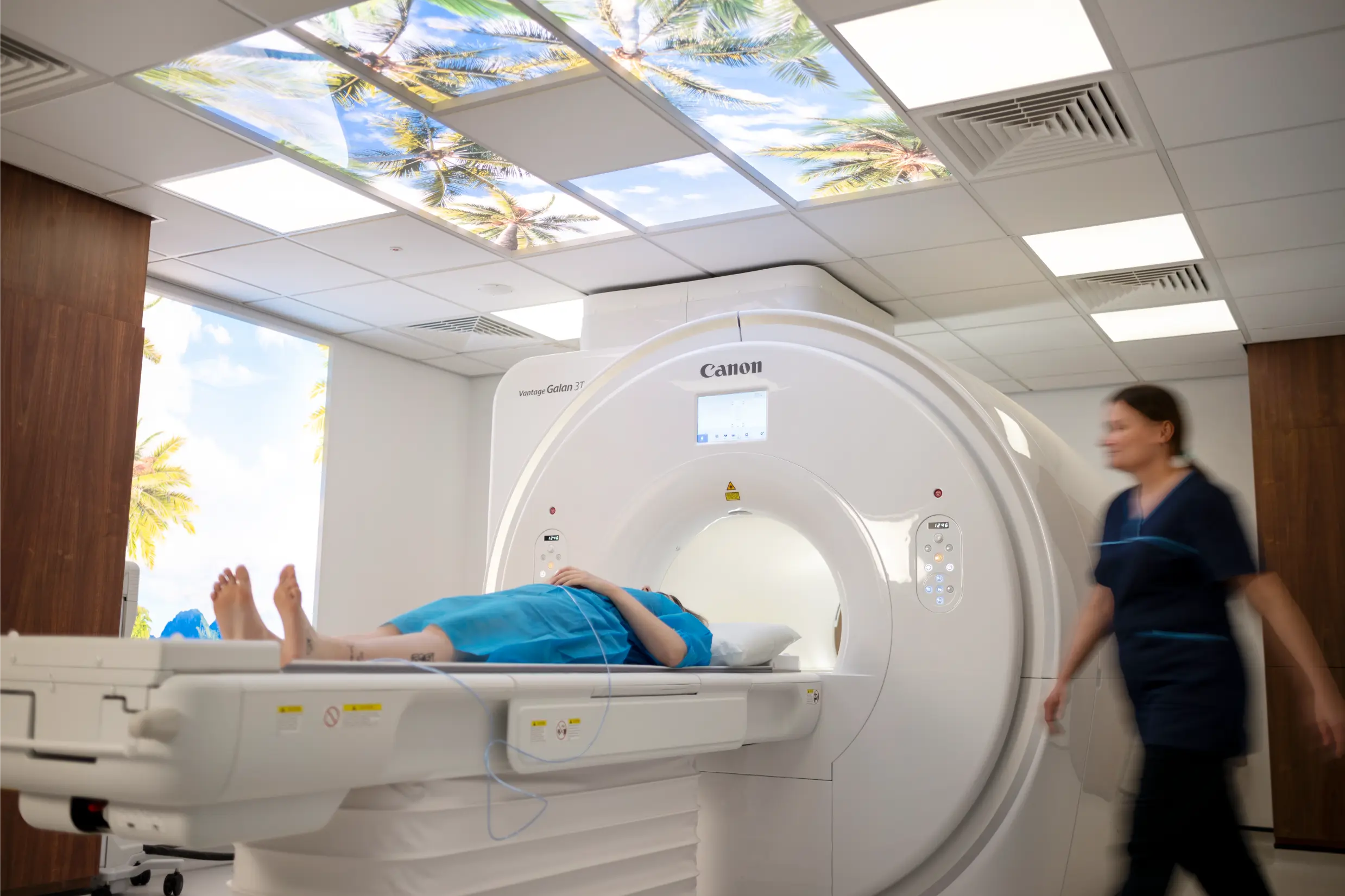
MRI has transformed the way healthcare teams investigate prostate cancer. MRI provides detailed anatomical and functional imaging. These images allow clinicians to identify the location and size of potential tumours, assess how the cancer is behaving, identify suspicious areas, and estimate whether the cancer is significant. If there are no concerning imaging findings, men will not need to have an invasive biopsy, which can have unwanted side effects.
NICE guidance now recommends an MRI before biopsy in men with suspected prostate cancer. This ensures men don’t receive unnecessary treatment.
According to Prostate Cancer UK, over-treatment rates for prostate cancer are between 2% and 24% across different hospitals.
Prostate MRI is one of the most important tools in prostate cancer diagnosis. While it doesn’t replace biopsies entirely, it helps ensure that biopsies are highly targeted and only for those who need them.
In the past, men would have had a prostate biopsy based solely on PSA levels. Prostate biopsies can pick up slow-growing or non-aggressive cancer that might not cause any problems or symptoms. For this reason, over-treatment is common.
MRI-first pathways improve diagnostic precision. If MRI findings are reassuring, there may be no need for a biopsy. If an MRI shows suspicious areas on the image, the consultant can target biopsies to specific areas.
This approach improves the detection of clinically significant cancers and reduces overdiagnosis and unnecessary treatment.
For men seeking private prostate MRI in Yorkshire, LivingCare offers patients access to advanced 3T imaging technology. This high-resolution imaging helps clinicians make confident decisions.
The traditional transrectal biopsy approach involved passing biopsy needles through a rectal wall into the prostate. While widely used in the past, this carried a small but recognised risk of infection.
The preferred method is the transperineal approach. A transperineal prostate biopsy, as carried out at LivingCare in Sheffield, involves passing biopsy needles through the skin between the scrotum and anus – rather than through the rectum.
This technique carries a lower risk of infection, offers better access to all areas of the prostate for sampling access and reduces the need for further procedures.
For men searching for a prostate biopsy safer alternative in the UK, the transperineal approach is now widely regarded as best practice.
Today, the prostate cancer diagnosis pathway relies on more than a single blood test. It combines PSA testing, MRI and when needed, transperineal biopsy. This integrated approach improves accuracy while minimising the need for intervention.
Waiting for tests and results is an anxious time. LivingCare delivers the complete diagnostic pathway at our locations across Sheffield and Leeds, including:
Our imaging-led approach aligns with modern NICE guidance and focuses on identifying clinically significant cancer.
Accurate prostate cancer diagnosis combines advanced imaging, PSA blood tests and safe biopsy techniques to make informed decisions.
LivingCare delivers the complete prostate diagnostic pathway at our locations across Sheffield and Leeds, and we can refer to onward treatment pathways if required.