
Perimenopause Symptoms: When Should You Seek Help?
Oct 18, 2026


Skip the phone queue - book your appointment in minutes, day or night.
Published on
8/9/2026


The LivingCare Group
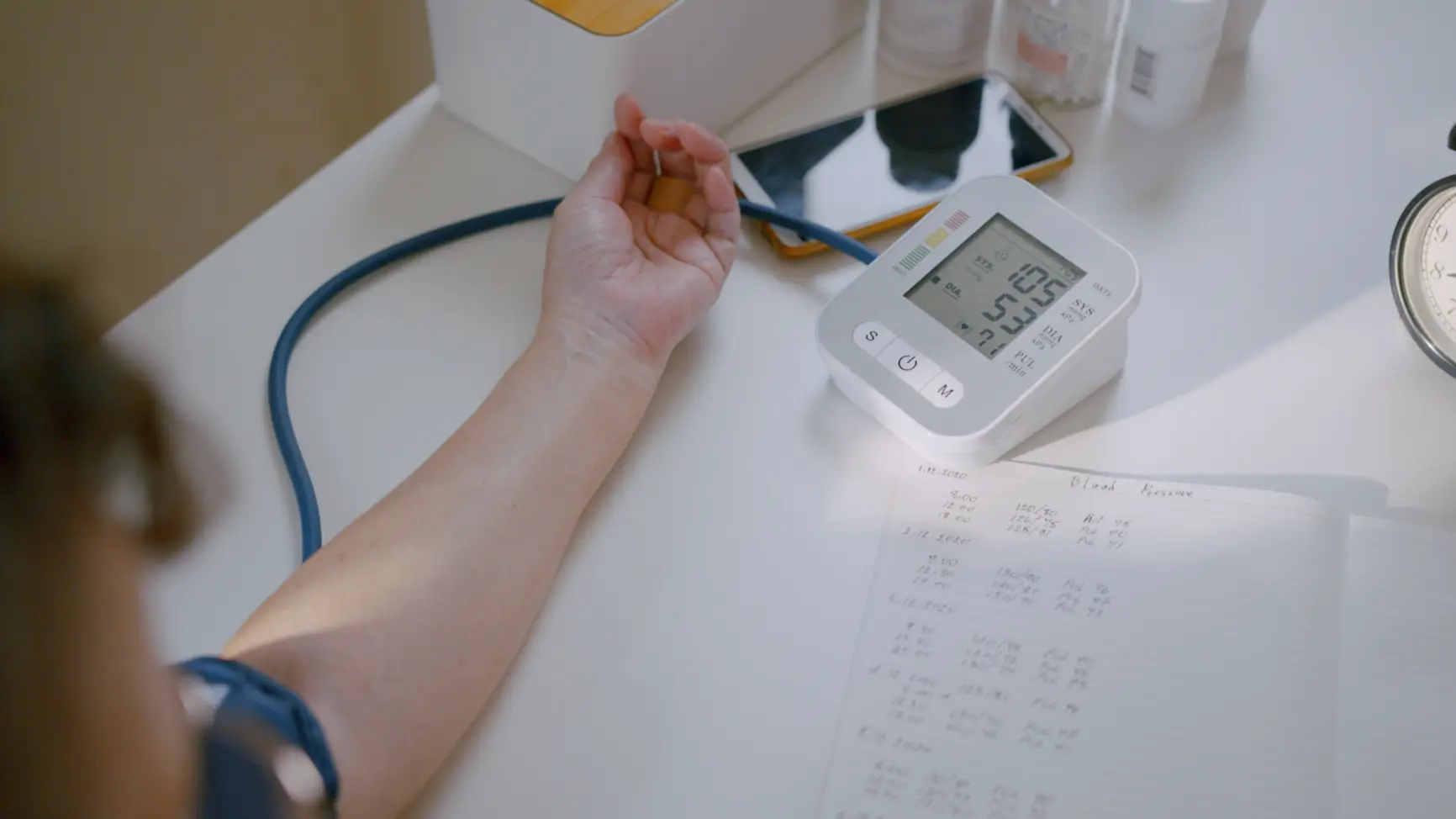

There is no single figure everyone should be aiming for. Around 120/80 sits within the healthy range. The NHS treats a reading as high at 140/90 or higher when checked by a healthcare professional, or 135/85 or higher when checked at home1. What matters is where your own reading sits, and most people have never had it explained to them.
That gap is wider than it sounds. More than 11 million people in the UK have been diagnosed with high blood pressure by their GP, which means up to 5 million adults could be living with it undiagnosed [2]. Blood Pressure UK's Know Your Numbers Week runs from 7 to 13 September 2026, which makes this a sensible month to find out where you stand.
It is a range rather than a number, and the two authorities most people turn to approach it differently.
Blood pressure is written as two figures, with the first higher than the second3, and measured in millimetres of mercury (mmHg). The first number measures the systolic pressure, the highest level your blood pressure reaches when your heart pumps blood around the body. The second measures the diastolic pressure, the lowest level it reaches when your heart relaxes between each heartbeat [3]. The NHS publishes thresholds - the points at which a reading counts as high or as low - and does not publish a single figure to aim at1 3.
The British Heart Foundation does describe a healthy adult range, and puts it between 90/60 mmHg and 130/85 mmHg4. Just above that, between 130/85 mmHg and 139/89 mmHg, is what it calls slightly raised blood pressure, sometimes known as "pre-hypertension" - raised, but not yet diagnosed as high blood pressure4.
So around 120/80 is comfortably inside that band, and below both of the NHS thresholds. It is one figure within a healthy band, though, not a score to hit.
There are two thresholds, and which one applies depends on where the reading was taken. In the NHS's words, your blood pressure is usually considered high if it's either 140/90 or higher when checked by a healthcare professional, or 135/85 or higher when checked at home1.
The setting is part of the fact, not a detail. A reading taken at home can sit below 140/90 and still be high, because 135/85 is the figure that applies to home readings1. If you use a monitor at home, that is the number to measure yourself against.
Not necessarily. The British Heart Foundation states that if you're over 80 years old, your blood pressure should usually be below 150/90 mmHg when checked by a healthcare professional or below 145/85 mmHg when checked at home4 - higher than the thresholds that apply to younger adults.
That is one reason a single universal target does not exist. What a reading means depends on the person it belongs to, which is a conversation with a clinician rather than something to settle against a chart.
Usually not. The NHS is direct about it: high blood pressure does not usually cause any symptoms, and many people have it without realising it1. Rarely, it can cause symptoms such as headaches, blurred vision or chest pain1. Waiting for a symptom is not a reliable way to find out - the only way to know is to have it measured.
Because blood pressure moves through the day, and a single reading captures one moment of it. Two patterns in particular can be missed at a one-off appointment.
The first is "white coat hypertension", named for readings that run higher in a clinical setting than they do in everyday life. The second is the reverse, "masked hypertension", where readings look fine at an appointment but sit higher the rest of the time. LivingCare's 24-Hour Blood Pressure Monitoring is used to detect both, and to assess how well blood pressure medication is working.
You wear a small automated blood pressure monitor that connects to a cuff, which is placed around your upper arm. The device automatically inflates the cuff and takes readings at regular intervals throughout the 24 hours, tracking your blood pressure day and night to give an accurate picture.
That picture helps diagnose hypertension - the clinical term for high blood pressure - assess how well treatment is working, and investigate related symptoms. The results are then interpreted at a Cardiology Consultation, alongside everything else that matters about your health.
The NHS defines low blood pressure as a reading of less than 90/60mmHg5. A low reading is not automatically a problem, but if it comes with symptoms that worry you, it is worth having looked at.
Very. The British Heart Foundation estimates that 30 per cent of adults in the UK have high blood pressure - around 16 million adults - and that up to half of them are not receiving effective treatment2.
No GP referral needed for self-pay - you can book directly, in Leeds or Sheffield. If you are using medical insurance, your insurer may ask for a GP referral letter.
Cholesterol - the other measurement that carries no symptoms with it. Our companion article, What Do Your Cholesterol Numbers Mean, And When Should You Get Tested?, covers what those figures are and where they come from. Cholesterol is checked as part of LivingCare's cardiac blood tests.
If you have had a reading you would like explained, or you would like your blood pressure tracked across a full day rather than a single moment, LivingCare's consultant cardiologists can see you quickly, self-pay, with no GP referral needed. If you are using medical insurance, your insurer may ask for a GP referral letter. Our cardiology service runs at Thorpe Park Clinic in Leeds and Canon Medical Arena in Sheffield. Exceptional care, without the wait.
This article is for general information and is not sponsored content.