Skip the phone queue - book your appointment in minutes, day or night.

Learn about benign skin lesions including moles, cysts, lipomas, skin tags and warts, plus when assessment or treatment may be recommended.

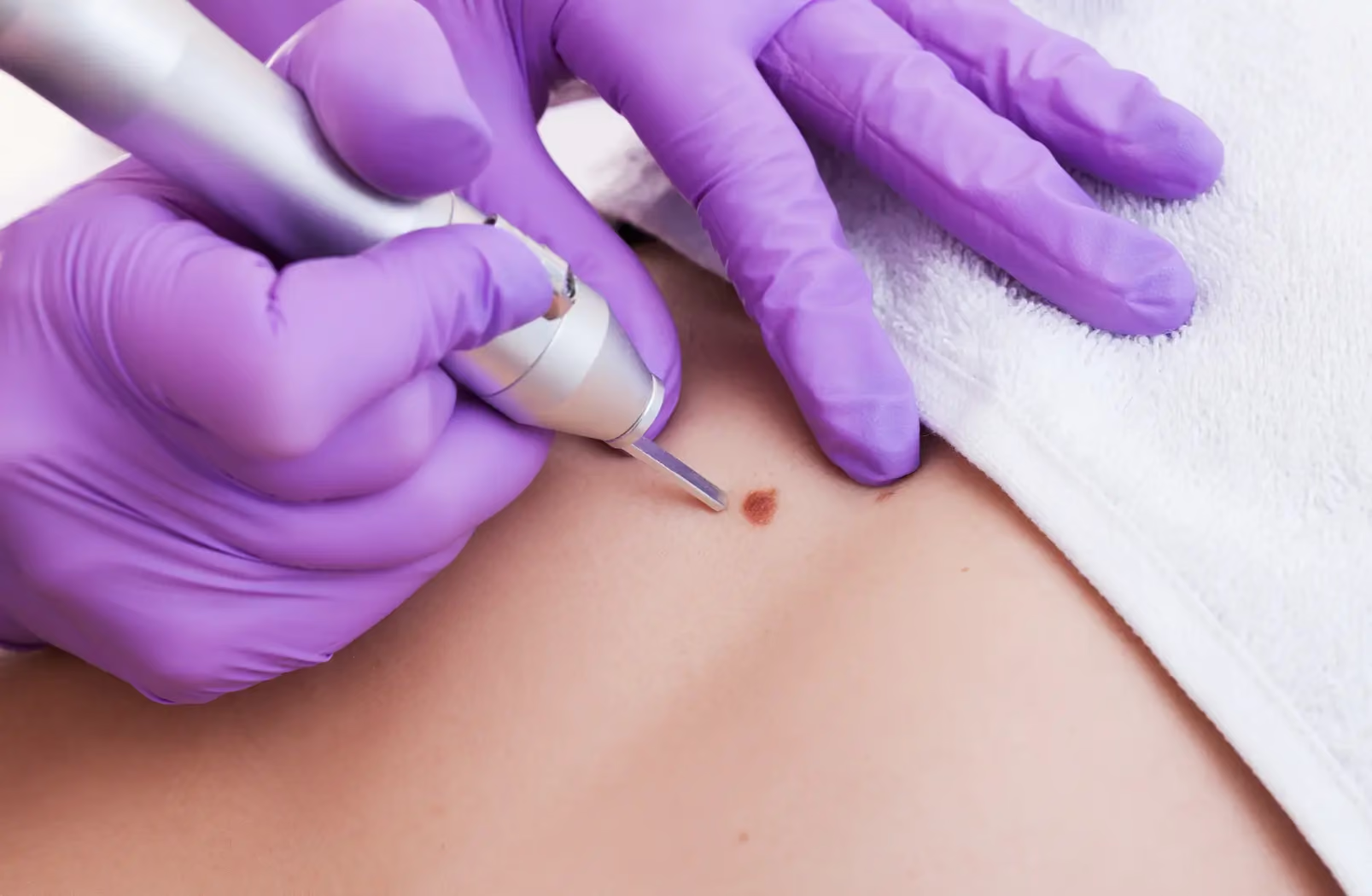
Benign skin lesions are extremely common and include conditions such as moles, skin tags, cysts, lipomas, warts and seborrhoeic keratoses.
Most benign skin lesions are harmless. However, some may become irritated, uncomfortable, inflamed or cosmetically concerning. In some cases, lesions can also resemble skin cancer, making professional assessment important.
Common benign skin lesions include:
Some lesions remain stable for many years, while others can gradually change in size, shape or appearance.
You should consider seeking assessment if a skin lesion:
Even harmless lesions can sometimes become uncomfortable or difficult to distinguish from more serious skin conditions.
A dermatologist or specialist clinician will usually examine the lesion closely using dermatoscopy. This involves a handheld magnifying device that allows the structure and pigmentation of the skin to be assessed in detail.
In some cases, removal or biopsy may be recommended to confirm the diagnosis.
Treatment depends on the type of lesion, symptoms and whether removal is medically or cosmetically appropriate.
LivingCare provides:
Some lesions may simply require monitoring rather than treatment.

We're always on hand, so get in touch and we'll get back to you straight away.
Speak to our team