Skip the phone queue - book your appointment in minutes, day or night.

Learn about actinic keratosis, including symptoms, sun damage and when treatment may be recommended.

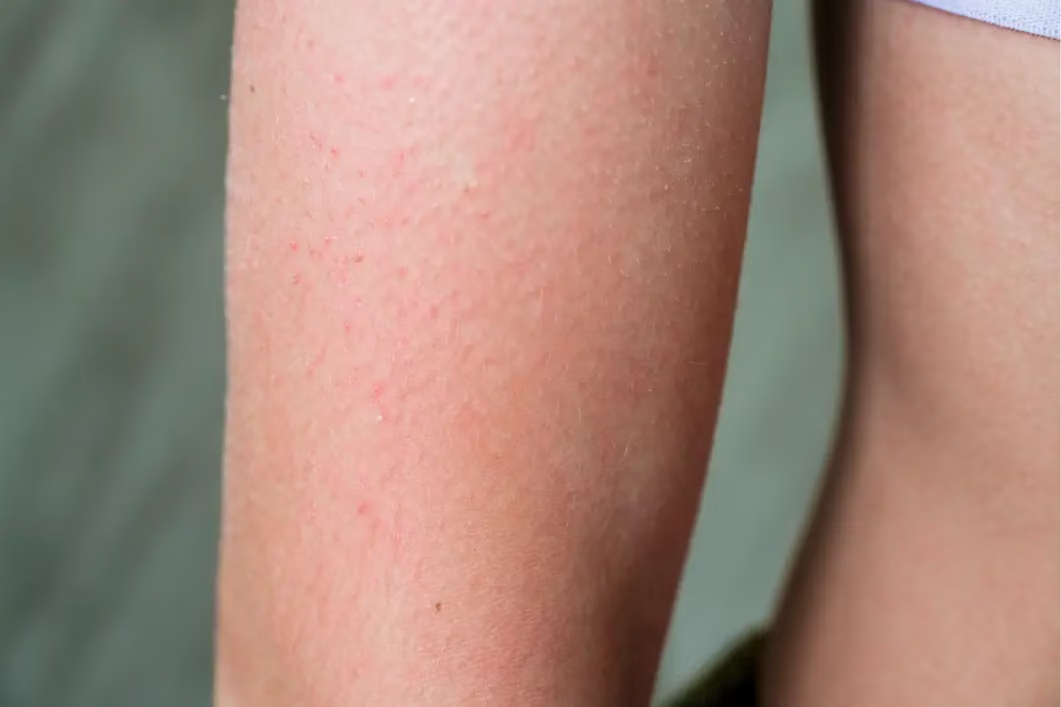
Actinic keratoses are rough, scaly patches of skin caused by long-term sun exposure.
They commonly develop on sun-exposed areas such as the scalp, face, ears and hands.
Actinic keratoses are considered pre-cancerous because a small proportion can develop into squamous cell carcinoma.
Symptoms may include:
Risk factors include:
Rapid growth, bleeding/ulceration, pain/tenderness, or a raised lump are not usual features of actinic keratosis, and these features should be assessed urgently to rule out skin cancer.
Treatment may help reduce the risk of progression to skin cancer.
LivingCare provides cryotherapy, topical creams and surgical treatments for selected actinic keratoses.

We're always on hand, so get in touch and we'll get back to you straight away.
Speak to our team