
Bowel Prep, Honestly: What It's Really Like Before A Colonoscopy
Oct 7, 2026


Skip the phone queue - book your appointment in minutes, day or night.
Published on
14/4/2026


The LivingCare Group

Bowel cancer is the third most common cancer in the UK, but when it is diagnosed early, treatment is often far more effective. If you have been experiencing symptoms, or have received a screening result that needs further investigation, the next step is usually a series of tests to understand what is causing those changes.
A key point that most people don’t realise is that bowel cancer is preventable. Almost all bowel cancers grow from small polyps. In expert hands these can nearly all be detected and removed during a colonoscopy test, stopping cancer before it develops.
In England routine screening involves a stool test (FIT) every 2 years from age 50. This is good at detecting early cancers but it is not accurate for detecting polyps.
For many people, the uncertainty around diagnosis is the most difficult part. Understanding what tests are involved, how the process works, and what happens next can make things feel more manageable and help you act with confidence.
At LivingCare, patients across Leeds, Sheffield and Yorkshire can access:
You may be referred for further investigation if you have ongoing or unexplained symptoms, or following a bowel screening result.
Common reasons for referral include:
These symptoms are often caused by less serious conditions, but if they persist, they should always be checked.
There is no single test for bowel cancer. Instead, a combination of investigations is used to confirm a diagnosis and understand what is causing your symptoms.
This is often the first step and can be done at home. It checks for small amounts of blood in your stool that may not be visible. A positive result does not confirm cancer, but it does indicate that further investigation is needed.
A colonoscopy is the most accurate way to examine the bowel and is considered the gold standard test. A thin, flexible tube with a camera is used to look inside the colon and rectum. If anything unusual is found, biopsies can be taken during the same procedure.
In some cases, a sigmoidoscopy may be used to examine the lower part of the bowel. This is a shorter procedure than a colonoscopy and may be recommended depending on your symptoms.
Imaging tests can be used to create detailed pictures of the bowel and surrounding areas. These scans help identify abnormalities and may be used alongside endoscopic tests.
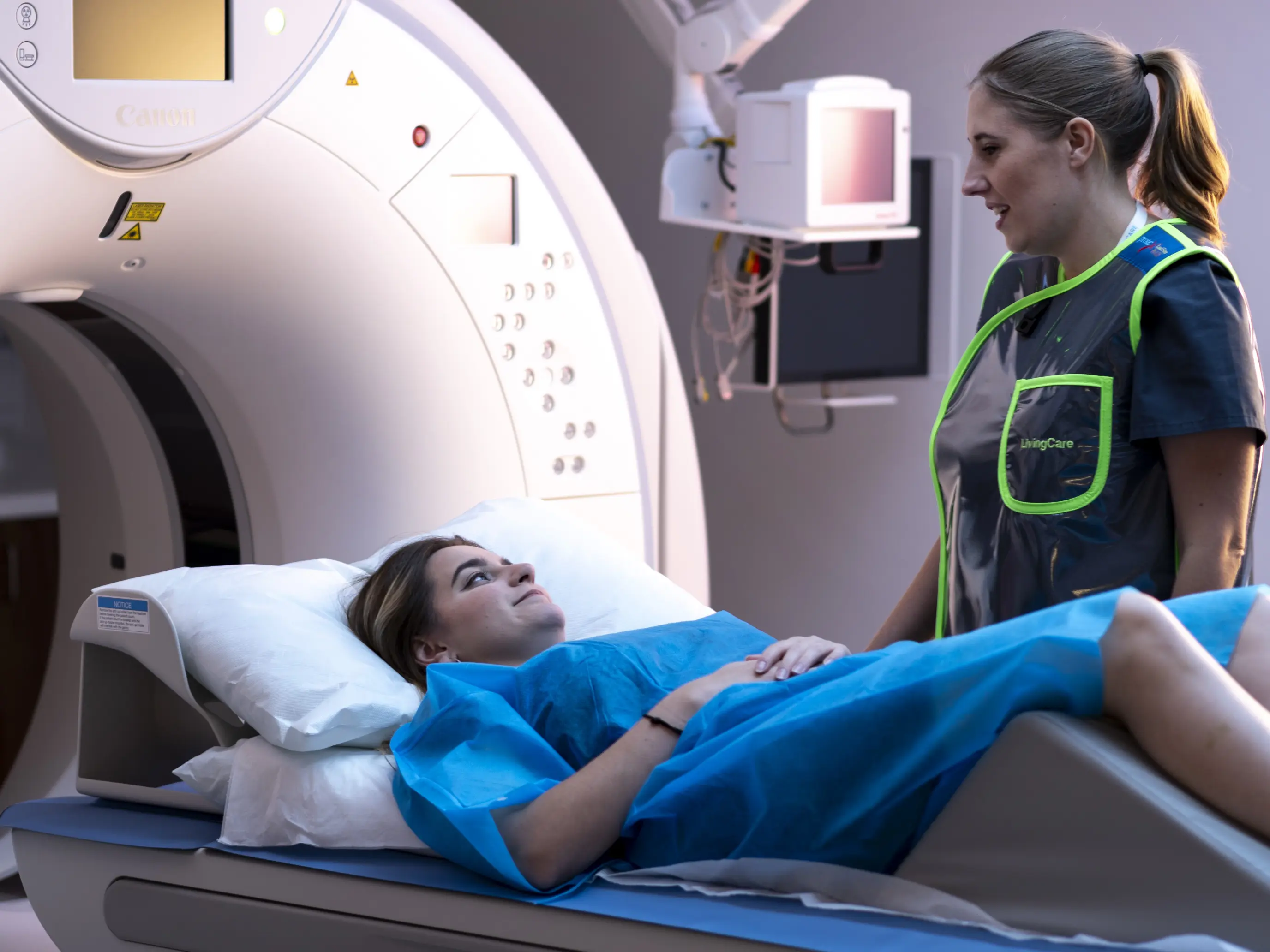
MRI scans are not usually the first test for bowel cancer, but they can play an important role in the diagnostic pathway. They are often used after initial investigations to provide more detailed imaging and help assess whether a condition has spread, supporting treatment planning where needed.
At LivingCare, patients in Leeds and Sheffield can access both endoscopic procedures and advanced imaging, including MRI, as part of a comprehensive diagnostic pathway.
A colonoscopy is usually carried out as a day-case procedure. Before the test, you will be given preparation to clear the bowel, which is essential for accurate results.
During the procedure, sedation is often offered to help you feel more comfortable. The test itself typically takes between 30 and 60 minutes, and most patients are able to return home the same day.
Results are reviewed by a specialist consultant, who will explain the findings clearly and talk you through any next steps. This may include reassurance, further monitoring, or referral for treatment if required.
One of the main benefits of accessing private care is speed. At LivingCare, patients across Leeds, Sheffield and Yorkshire can often access tests and results much more quickly, helping to reduce uncertainty and begin treatment sooner if needed.
If bowel cancer is diagnosed, your consultant will discuss the next stage of care with you. This may involve further imaging, referral to a specialist team, or planning for treatment.
If cancer is not found, your symptoms will still be taken seriously, and further investigation or management may be recommended depending on the cause.
Bowel cancer often develops over a long time, often starting as non-cancerous growths known as polyps. Identifying and removing these early can prevent cancer from developing.
According to Cancer Research UK, bowel cancer is far more treatable when diagnosed early, which is why acting on symptoms and attending screening is so important.
LivingCare provides fast access to bowel cancer diagnostics, including FIT testing, colonoscopy, sigmoidoscopy and advanced imaging such as MRI, delivered by experienced consultants in modern clinical facilities.
With convenient locations in Leeds and Sheffield, patients across Yorkshire can access high-quality care without long waiting times. From initial consultation through to diagnosis, the focus is on providing clear answers and a straightforward pathway to treatment or reassurance.
If you:
You can book directly with LivingCare and be seen promptly by one of our expert consultants.